
Why are things like this?
Project management has a fairly unglamourous image today, with everyone being interested in new technologies like additive manufacturing or the latest pallet systems available for their CNC mills. Projects so often end up with a few team leaders firefighting problems, flustered designers, and the planners reduced to tears—seeing the dates on their neat Gantt charts recede further and further from any semblance of reality.
Why does this so often seem to happen? Is it just “how things are”, and if so, why?
Has it always been like this?
Sometimes a good way to look at difficult problems like this is not to try to dissect current events in which the real inside details are often obscured by political exigencies or desperate corporate face-saving. Instead, we can find some pertinent examples from history where the original letters are available, and the passage of time has removed any embarrassment.
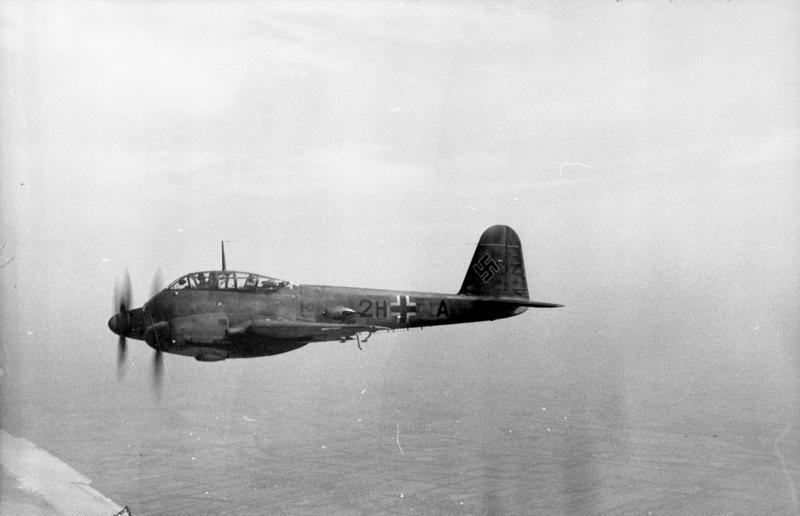
One such example was the dramatic reversal in fortune of the German Luftwaffe, from overwhelming success in the 1930s to stalling in 1941, and finally to technical obsolescence which had become obvious by 1943, and was then followed by the inevitable catastrophe.
Much of the inevitability of this failure was in fact known to some of Germany’s top designers as early as 1936, what went wrong?
German strategic superiority in military aircraft (which includes numerical, tactical, and technical achievement), really peaked about 1941, although it continued until late 1942, after which they never again possessed it (the outstanding turbojet fighters they produced were neither reliable nor numerous enough to make the required impact).
The failure of Germany to retain the ascendency in the sky is a story which plays out long before the emergence of turbojet fighters, however, and is instead seen in the development of their conventional piston powered types.
Meet Robert Lusser.
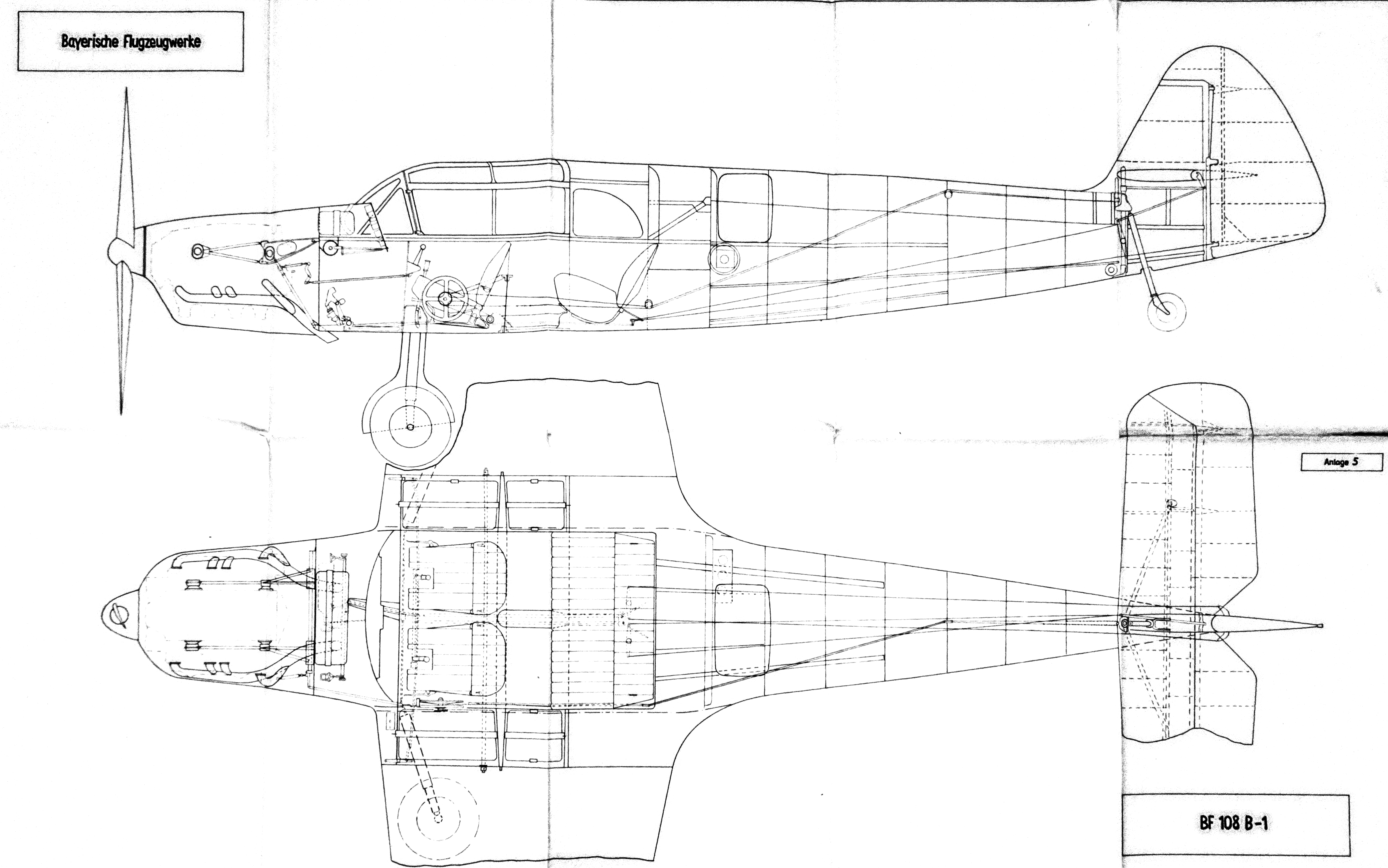
One of the key top designers in German aviation was Robert Lusser. He joined the Bavarian Aircraft Works (Bayerische Flugzeugwerke, BfW) in 1933, and, with Willy Messerschmitt, completed the design for a small civil monoplane “touring aircraft”, which eventually became the Bf108. This was the father of Germanys most famous fighter, the infamous Bf109 fighter. From there, Lusser,now the head of the design office at BfW, took charge of the heavy fighter project, the Bf1101.
1 Much confusion exists about the use of Bf or Me as a prefix for Messerschmitt aircraft. In reality, during the war, the two naming conventions were used interchangeably in official German documents. However, the most 'correct' usage is that aircraft types designed before 1938 (when Messerschmitt was made a director and the firm renamed) are prefixed “Bf” and those after that “Me”.
Lusser later left and worked for Heinkel and, all in, he made contributions to a huge number of Luftwaffe aircraft which entered service.
The Bf109 was a fantastically successful aircraft. When it entered service, it was far superior to anything else in the world. The difficulties the aircraft had with landing have been drastically exaggerated over the years, and a scrupulous inspection of the surviving records does not, in fact, show any especially excessive rates of losses from landing accidents compared to other types.
The Bf109, along with the Heinkel He111 bomber and Me110 heavy fighter, meant that in the late 1930s the Luftwaffe had an outstanding air force, but these types could not be relied upon to hold air superiority forever, and by the time war broke out with Poland and the rest of Europe, these designs were already half a decade old. The Bf109 was upgraded with a larger and more powerful engine from Daimler-Benz to replace the Junkers-Jumo it had entered service with, but even during the Battle of Britain, the German aircraft were already showing their age. The Bf109 had far too short a range, and no drop tanks had been developed. The Bf110, although far, far better than its reputation might suggest, was now under-powered and poorly armed in rear defence. In addition, the Luftwaffe bombers were woefully badly armed to defend themselves from fighter attacks. What was superlative in the mid-30s was, at best, adequate by 1940.
In truth, the Luftwaffe should have had better aircraft for the Battle of Britain, at least for the tail end of it as it neared 1941.
A cautionary tale: the Me210.
This was, in fact, being planned for. Messerschmitt had already realised that a better heavy fighter than the Me110 was needed—so the Me210 was being designed. It was a far sleeker and more advanced design that the Me110, including very forward-thinking aspects such as remote-controlled rear armament, which is dramatically more effective than hand-held mounted guns like the Me110 was equipped with at the rear. However, when it was test-flown in 1939, it was a catastrophe.
When the Messerschmitt company was designing the new Me210 and had not enough resources, the German Air Ministry (Reichsluftfahrtministerium, RLM) simply took a small design team from the competing Arado firm, including two men, Frölich and Rethel, and required Messerschmitt to admit them to their own design staff for the early portion of the design work2.
2 TNA, AIR-40/200, see memo “TOP SECRET” dated “12/3/1943”
When the Me210 was tested, the wing aerodynamics was found to be very poor and, along with the tail, the root cause of the dangerously unstable characteristics of the aircraft. We can guess what the Arado designers who had been brought in had designed: the wings. It can hardly be imagined that these men were stupid, but it is probably a lesson that something as complex as an aircraft must be designed with a holistic continuity to the design concept if it is to succeed. Which is to say, there are dozens of concepts which may overall produce a very good twin engine aircraft, but if you take ¼ of one idea and ¾ of another, you will not get a result giving unity. All the designers must be working towards a common conceptual idea, driven by a leader who has a clear vision for the overall idea he is sure will work. Probably, if the Arado firm had been given the contract for the specification to which the Me210 was created, Frölich and his wing designers would have made a successful design, as probably the concept they would work towards would mesh with that of their co-workers and manager.

What of the tail? The tail had been intended to be a twin design like the successful Me110, but it had, according to interrogation records, been switched for a single large design on the direct instructions of the RLM, who, to save time, had also instructed that the design plans bypass the usual checking stages and proceed straight to the construction of a prototype aircraft.
What happened? It seems totally inexplicable that a firm like Messerschmitt could produce a slow, unstable, and aerodynamically unsound design, after spectacular successes with the Bf108 and Bf109, and workmanlike but still very useful aircraft like the Me110. Willy Messerschmitt was pilloried for the failure by the German Air Ministry. This became so severe that it directly contributed to Messerschmitt being deposed as a director for what was, in effect, his own company.
Engineers—and engineering concepts—can't be chopped and changed overnight.
The truth was murkier, and only suddenly began to make sense when I found a very long letter written, during the war, by Lusser himself, to the German Secretary of State for Air, Erhard Milch. This letter, when combined with British Intelligence interrogation records of German engineers from the Messerschmitt firm at the end of the war suddenly draws this whole situation into sharp focus.
The German Air Ministry, it turned out, was also aware that the pace of technological development was accelerating at a frightening rate, even by the mid 1930s. So, in 1936, they instituted a crash programme of modernisation of the planning procedure for new aircraft types. This was designed to shorten the time between concept drawings, and mass production of a new aircraft type by one whole year. This, of course, necessitated huge changes to the way new types were tested and checked. One shortcut taken was that the architects of this new accelerated way of working at the RLM considered that one complaint from the manufacturers was that they did not have the capacity in terms of designers or engineers to complete the new designs in the new timeline. So, they said, why not find out from other firms if they have any spare designers with the correct experience to “swap” when they happened to be under-utilised at a competing firm?
The reason why this should be avoided became very clear when early prototypes of the Me210 were declared physically dangerous by test pilots.
Some badge engineering.
After years of calamity and re-work, the Me210 was finally returned to something resembling its original design intent, and along with a few other fixes, it became a very useful and high-performance aircraft. However, the Me210 name had been so sullied that it was named the Me410, rather than the Me210 ver2.
By that point, so much time had expired trying to fix the Me210, that the Me410 was perhaps two or three years out of date when it entered service, and achieved comparatively little relative to the potential of the concept which took flight years earlier in 1939.
Lusser's diatribe.
By this stage (mid 1942), the Luftwaffe was in very serious trouble indeed, so Lusser wrote to Erhard Milch, vilifying the entire process of new type development and testing that the Luftwaffe was forced to comply with by the RLM.
So disgusted was Lusser by the new accelerated project management
timelines given, he wrote to Milch, saying
these ideas are nothing more than a fantasy!
Lusser's letter can be condensed down to the following points:
-
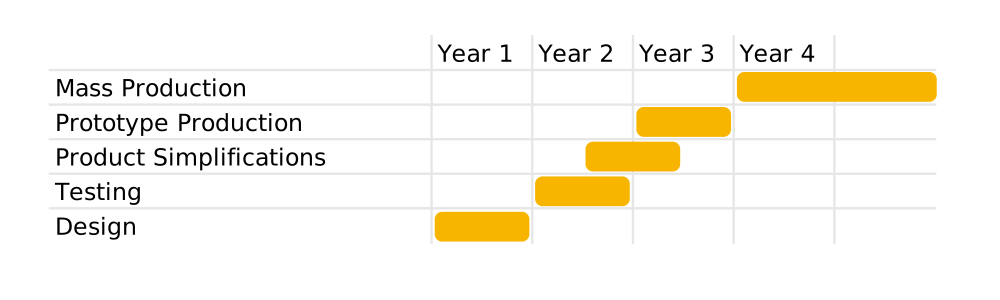
Successful deployment is made possible by adherence to the
following proven time-plan.
-
Problems occurred when the following “compressed” time plan was imposed on industry by the RLM, in order to reach mass production one year earlier.
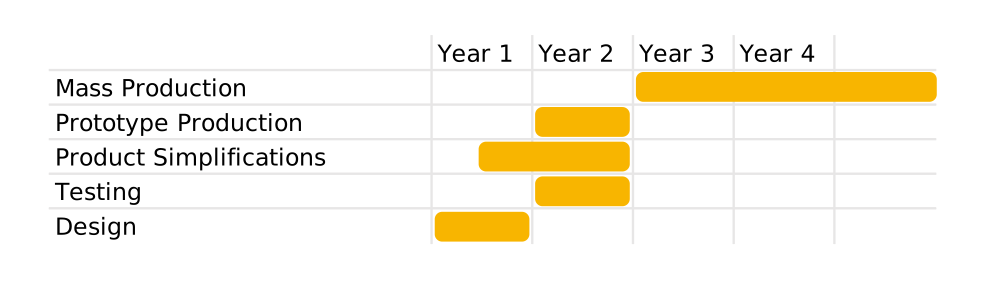
In reality what happened when the “compressed” timeline was attempted was not as above, but, as below.
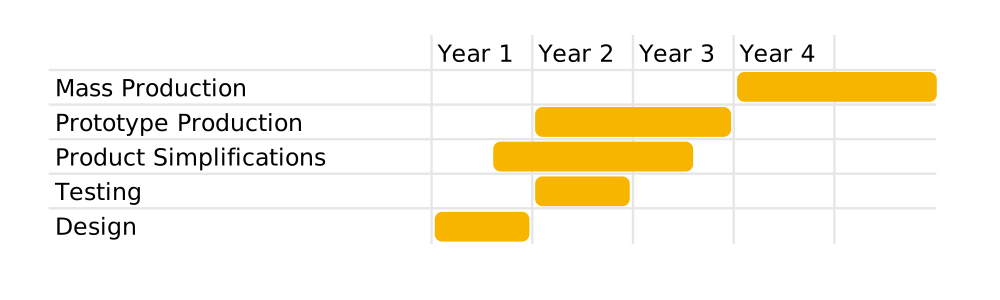
- Scheduling was made using past data on projects as a guide. This ignores the fact that the projects are not simply “more” projects, but are next-generation developments. Lusser estimates that the complexity increase of new aircraft has increased the engineering effort for an aircraft of the same size by between 5 and 10 times over a decade. This was not taken into account.
- Competition is useful, but frequently it led to firms promising absurdly short development deadlines in order to “win” contracts.
- Too much emphasis is placed on the “first flight” date, which was often at dramatic cost to the date of mass production starting, which is far more important than when the first test flight occurs.
- Overburdening firms by assumption of early reduction in design effort needed after the first test flight. It was assumed that once the aircraft has been test flown, huge numbers of engineers could be very quickly taken off the aircraft and assigned to the next project. In reality, the effort to get to the first flight is only a fraction of the total effort needed, and the expected reassignment of resources to new projects prior to the completion of the first project never occurred.
-
Lusser relates that this obsession with getting the next “big project” to flight status overlooked the fact that the big achievement is actually mass production, not early newspaper headline grabbing fights:
A worrying side effect of this fragmentation is that the new developments took up so much of the interest and energy of both the managerial and the individual designers that the less interesting but often more important supervision of the large-scale projects were neglected.
Lusser makes many other points but closes with two important statements:
-
A healthy large-scale production of mature types must be considered the main goal of development, especially in wars. False inventor ambition and company interests, on the other hand, take a back seat. You can’t wage war with prototype aircraft!
-
Rushing when defining the project, design and construction certainly leads to technical setbacks and often to profound mistakes in development. Therefore, the apparent gain in time achieved is usually lost many times over when mass-production is delayed.
We've learned our lesson, right?
It is certainly the author's experience that very few firms today have paid much heed to these profound and dangerous errors, which were, in this case, serious enough to alter the course of the most important global war of the last century.
What happened to Lusser?
Lusser was whisked off to the USA after the war's end, where he assisted the USA in their space programme. He was unconvinced about the statistical likelihood of a successful moon mission, and later returned to Germany, where he successfully predicted the problems about to occur with the Lockheed Starfighter aircraft purchased by the post-war Luftwaffe, and also developed the first quick release skis.
He is regarded today as a key figure in German aviation history.
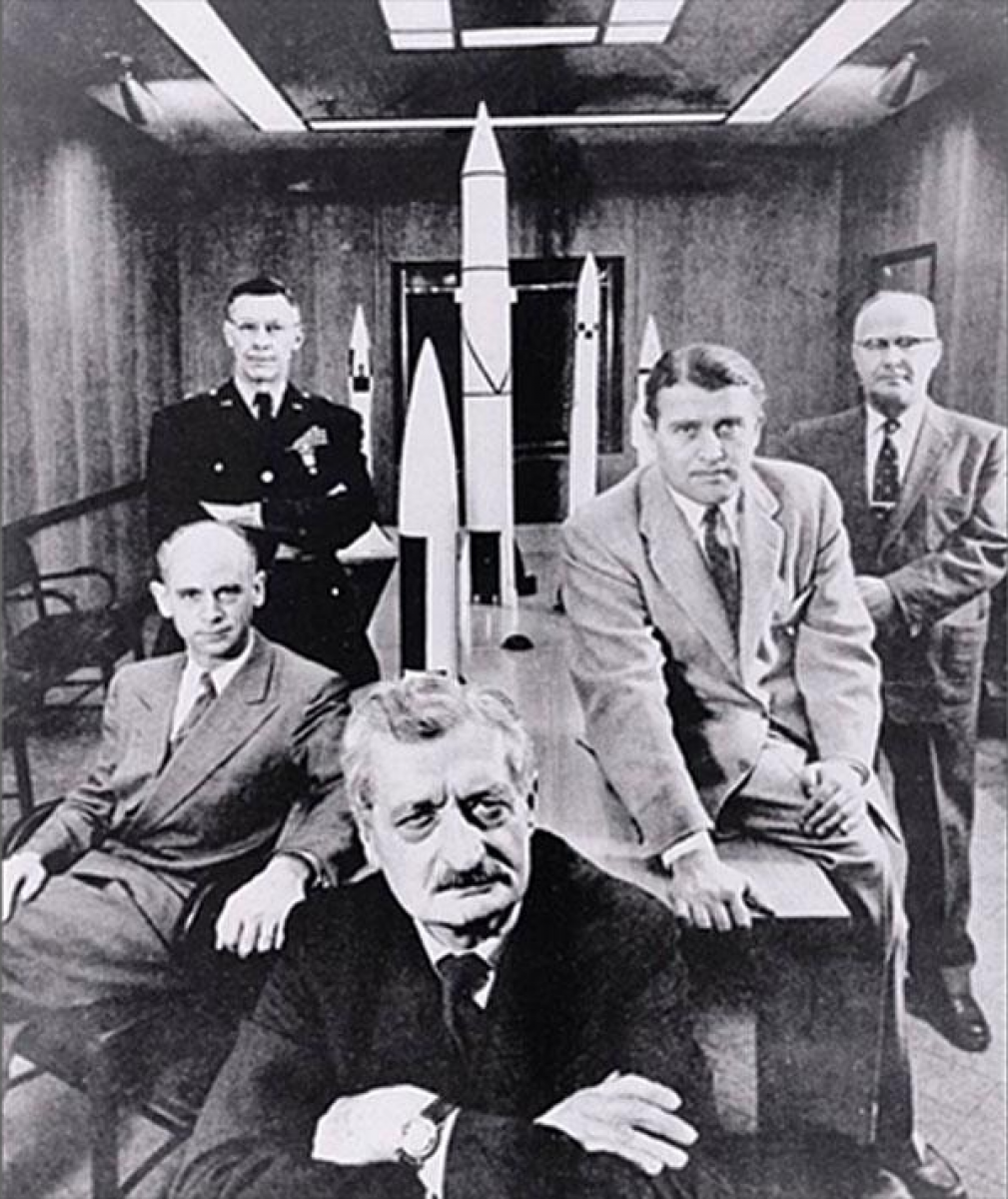
NASA photograph.